KiDoom: DOOM on PCB Traces
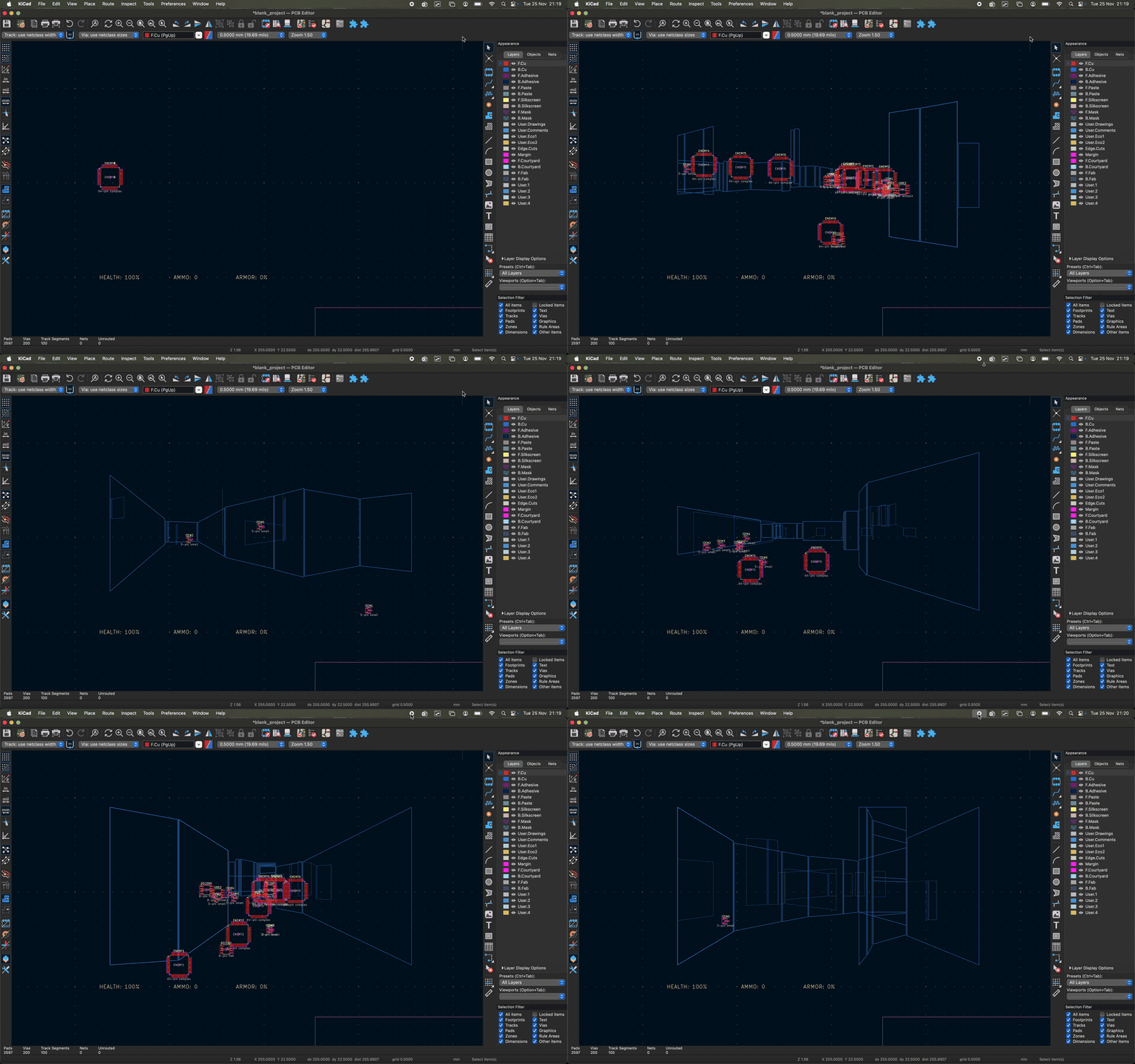
Running the classic 1993 shooter using real copper traces and component footprints in KiCad’s PCB editor
Media Coverage
KiDoom reached #1 on Hacker News and stayed there for almost a full day, generating widespread discussion across the tech community.
Featured In:
Hackaday: “KiDoom Brings Classic Shooter to KiCad”
Coverage of the vector rendering approach and how PCB traces become game graphics
Analysis of the technical achievement and community reception
Adafruit Blog: “KiDoom: Running DOOM on KiCad PCB Traces”
Maker community perspective on the project
Hackster: “I Always Thought Trace Routing Was Evil”
Nick Bild’s coverage of the vector rendering approach and PCB component representation
Tom’s Hardware: “Doom Gets Ported to Board Design App”
Coverage of the fully playable KiCad editor port running at up to 25 FPS
XDA Developers: “Someone Ported Doom Into a Circuit Board Editor”
In-depth look at how walls became PCB traces and demons became component packages
Daily.dev: “Doom Hits KiCad as PCB Traces Become Demons and Doors”
Community coverage of the creative technical achievement
#1 on Hacker News for nearly a full day
Videos:
UFD Tech YouTube Short | UFD Tech Instagram
What Makes It Work
Instead of rendering 64,000 pixels per frame (0.15 FPS), KiDoom extracts DOOM’s internal vector geometry directly from the engine - just 200-300 line segments per frame, achieving 10-25 FPS on PCB traces.
Enemies are rendered as real footprints: demons are intimidating 64-pin QFP packages, health packs are humble 3-pin SOT-23s.